
Cabac Crimp Lug Standard Type A Bi-Metal 120mm M12 Stud 115mm OAL
Cabac Crimp Lug Standard Type A Bi-Metal 120mm M12 Stud 115mm OAL
In stock
SKU
CAABL120-12
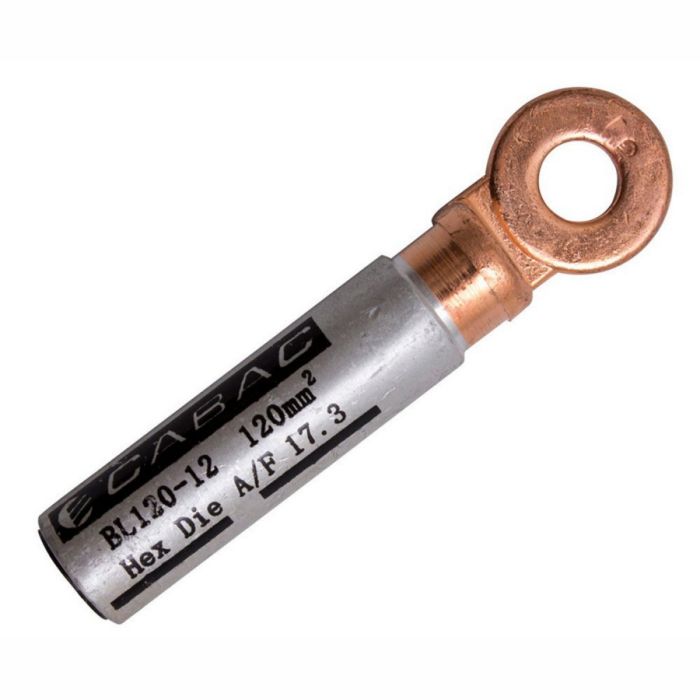
Designed for Stranded Sector and Circular Stranded Aluminium Conductors, the CABAC range of Bi-Metal Lugs is made from the highest quality aluminium (99.6%) and copper (99.9%) and are joined using a friction welding process. This produces a very strong electrically sound joint, which will not be subject to electrolysis. The barrel is chemically treated to reduce contact resistance and corrosion and is filled with a jointing compound, which breaks the oxide layers on the aluminium. When crimping the lug should be crimped from the palm end first, to force the joint compound into conductor strands. They are designed to be crimped using standard Australian tooling, using normal aluminium hexagonal dies.
| Features |
|
|---|---|
| Brand | Cabac |
| Range Name | Standard Lugs Bi-Metal |
| Standard Pack Size | 1 |
| UNSPSC Class | 39121400 |
| UOM | EA |
| Vendor Product | BL120-12 |
| A-F Hex Die | 17.3 mm |
| Barrel Length | 30 mm |
| Barrel Type | Standard |
| Body Material | Aluminium/Copper |
| Conductive Material | Aluminium Barrel/Copper Palm |
| Conductor Size | 120 mm |
| Crimping Die | HT-95/120AL |
| Finish | Tin Electroplated |
| Inside Diameter | 15.5 mm |
| Lug Length | 32.5 mm |
| Lug Thickness | 6 mm |
| Lug Width | 30 mm |
| Number of Holes | 1 Hole |
| Number of Crimps | 2 |
| Number of Strands | 37/2.03 |
| Overall Length | 115 mm |
| Palm Type | Round |
| Stud Size | 12 mm |
| Temperature | -40 to 100 deg C |
| Tensile Strength | 110 MPa |
Description
Designed for Stranded Sector and Circular Stranded Aluminium Conductors, the CABAC range of Bi-Metal Lugs is made from the highest quality aluminium (99.6%) and copper (99.9%) and are joined using a friction welding process. This produces a very strong electrically sound joint, which will not be subject to electrolysis. The barrel is chemically treated to reduce contact resistance and corrosion and is filled with a jointing compound, which breaks the oxide layers on the aluminium. When crimping the lug should be crimped from the palm end first, to force the joint compound into conductor strands. They are designed to be crimped using standard Australian tooling, using normal aluminium hexagonal dies.